
User managing bank account and payments using mobile application
The Global Financial Innovation Desk, a division of the March 2026 organization, is observing a significant evolution.
Financial Technology, or FinTech, continues to reshape the established banking landscape, and 2026 is poised to be a pivotal year for the global financial ecosystem. As the world embraces cutting-edge technologies like artificial intelligence, blockchain, and instantaneous digital payments, FinTech is fundamentally rethinking the delivery and consumption of financial services. This shift is streamlining operations and simultaneously redefining customer expectations within the banking industry.
Physical infrastructure and manual operations, which were the traditional banks, are transforming into digital-first institutions. The need to have quicker, safer, and customized services has challenged financial institutions to get innovative. Consequently, the partnership between the FinTech firms and banks turns out to be one of the major growth and modernization drivers in the sector.
The Digital-First Banking Rise.
The rise of digital-first banking has transformed the customer experience of a financial institution fundamentally. FinTech firms are focusing on user experience through providing easy onboarding experiences, immediate accounts creation, and AI-based financial guidance. The intuitive mobile applications have enabled customers to manage their finances without the need of going to a physical branch. This has made customer satisfaction and engagement much higher.
There is also the proliferation of smart phones and access to the internet which has made mobile banking services be adopted faster. Users are able to conduct transactions, pay bills, invest in their financial products and track their expenditure in real time. The response to this change by traditional banks is the decrease in their use of brick-and-mortar locations and a heavy investment in digital infrastructure. This shift does not only reduce the cost of operation but also enables the banks to access more people.
Significant Technologies that Power FinTech Disruption.
Machine Learning and Artificial Intelligence.
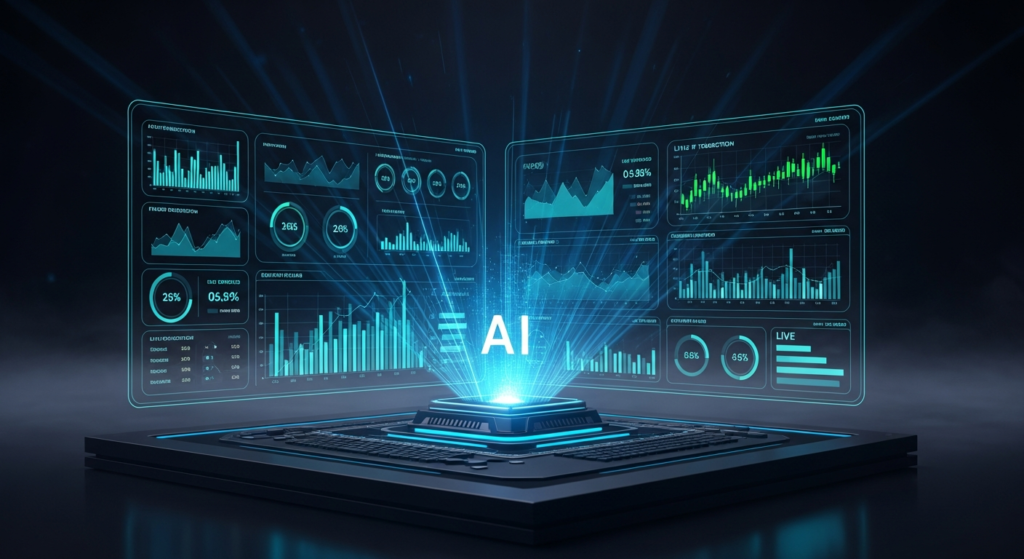
Machine learning and artificial intelligence (AI) are becoming a significant part of the contemporary banking industry. The technologies allow banks to support their customers automatically with the help of chatbots, identify fraud cases in real-time, and offer personalized financial advice. Through high amounts of data, AI systems are able to produce patterns and trends that can be used to enhance decision-making and risk management.
Decentralization and Blockchain.
The financial transactions are being transformed by blockchain technology. It provides a decentralized and transparent system that increases the security level and minimizes the necessity of intermediaries. This especially helps in the case of cross border payments that are now quicker, dependable and less expensive.
Open Banking APIs
Open banking has added a new dimension of partnership in the financial system. Third party developers are able to develop innovative financial products and services using Application Programming Interfaces (APIs), which are compatible with traditional banking systems. This creates a competitive environment and promotes the creation of improved customer-based solutions.
Effect on the Traditional Banking Institutions.
The emergence of FinTech has increased the level of competition among traditional banks, forcing them to be innovative and adapt fast. Startups in FinTech are also providing minimized services at reduced charges and shorter processing durations that are attractive to consumers in the modern world. To counter this, most banks are establishing strategic relationships with FinTech firms to have access to technological expertise and stay afloat in the market.
Besides, security has been a priority issue given the rise of digital transactions. To enhance their systems with better security against cybercrime, financial institutions are investing in enhanced cybersecurity systems such as biometric authentication, and encryption technologies to safeguard the data of customers and avoid losing trust. Although there is still a challenge of integrating new technology with the old technology, banks are getting through these barriers slowly due to constant innovation and upgrading of the infrastructure.
The Good News of Consumers and Businesses.
Faster Transactions
A major benefit of FinTech is the fact that transactions can be processed immediately. Using real-time payment mechanisms, one can transfer money in a fast and efficient manner without delays as it is the case with traditional financial practices.
Financial Inclusion
FinTech is also crucial in achieving financial inclusion through offering underserved people access to banking services. Digital platforms and mobile wallets would allow people in distant places to be involved in the financial system without physically having a branch of the bank.
Cost Efficiency
FinTech companies are able to provide services at reduced prices by cutting the cost of operation. This is good to both the consumers and the businesses and makes financial services more accessible and affordable.
Problems and Regulatory Issues.
Data Privacy Concerns
With the transition to a more digitized financial service, privacy and security of the user data is a significant consideration. Devising effective data protection systems to secure confidential data is a requirement by companies.
Regulatory Compliance
Laws are changing in response to the changes in technology. Financial authorities and governments are striving to come up with mechanisms to support innovation, but at the same time keep financial stability.
Problems in technology integration.
The need to integrate modern FinTech solutions into already existing legacy systems may be a complex and expensive process. Banks need to invest in the modernization of their infrastructure to make the implementation easy.
The future of banking will likely involve a combination of the stability of traditional banks and the innovative approaches of financial technology companies.
We can expect to see more artificial intelligence in financial planning and the growth of decentralized finance platforms. Additionally, a global digital payment system will probably become more common as technology continues to develop.
Banks that adopt such changes will be in a better position to deliver on the need of a fast changing market.
Conclusion
FinTech is not a new phenomenon but a force to be reckoned with in the banking sector. It is evident that, in 2026, FinTech innovators will collaborate with traditional banks and form an even more efficient, inclusive, and customer-centric financial ecosystem. With the increasing pace of digital transformation, the banking industry should keep innovating in order to keep up with the changing economy.
Questions People Ask Often.
1. What is FinTech?
FinTech is defined as the application of technologies to enhance and automate financial services.
2. What is the role of FinTech in changing banking?
It brings with it quicker dealings, electronic platforms and personalized services.
3. Is FinTech secure?
Yes, the majority of platforms have highly developed security measures such as encryption and biometrics.
4. What is the place of AI in FinTech?
AI is used in fraud detection and customer service, as well as financial analysis.
5. Are the traditional banks going to survive?
Yes, through changing and co-operating with FinTech firms.
Share this content: