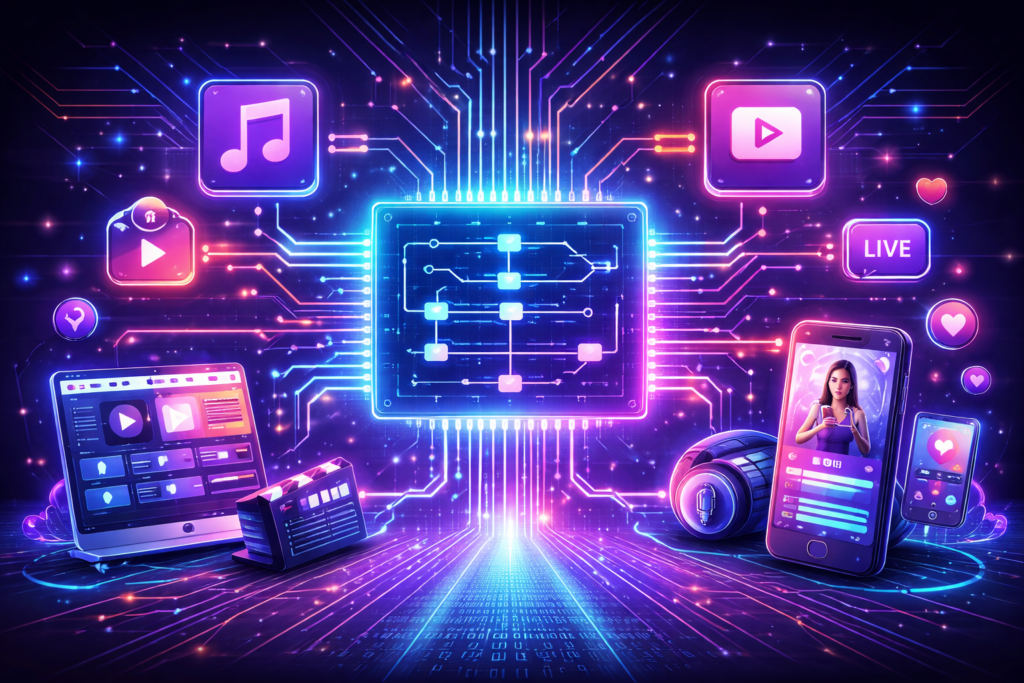
Digital algorithm controlling creative content flow across streaming platforms
Nowadays, entertainment is not only created by human imagination, but it is more and more controlled by algorithms in the context of the hyper-digital age. Social networks such as Netflix, Tik Tok and YouTube are data-driven, making decisions on what content to be delivered to users. Although this has revolutionized the process of accessibility and personalization, it has also brought up one important question is creativity being watered down in the process?
The Rise of Content-driven by Algorithms.
The Algorithms that are Making us watch.
The user behavior is monitored with the help of algorithms to track watch time, user engagement, clicks, preferences, and create individualized feeds. This gives a smooth flow of experience in which users feel to be heard and are continuously entertained. Nonetheless, this customization usually restricts access to a variety of content. Users are not shown anything new in terms of genres or angles, and in this way, they are slowly limited to what they can see in terms of entertainment without even being aware of it.
The Business of Predictability.
Algorithms minimize risk, as far as business is concerned. Platforms like to invest in the content that reflects previous successes instead of trying out some pieces of uncertain content. This results in the cycle of safe and familiar stories taking over screens. Although this guarantees consistent views and income, it also deters innovation and creativity and transforms the industry into a formula.
Effects on Artistic Creativity.
- Designers are under pressure to adhere to trending templates, rather than creativity.
- The process of storytelling is monotonized and organized in terms of engagement.
- Less support is provided to risk-taking and experimental projects.
- Individual creative voices find it hard to come into the limelight.
- Data affects artistic decisions and not emotions.
Creativity Under Pressure
Contemporary artists are not merely artists but also strategists who have to contend with algorithmic systems. This has altered the conceptualization and creation of content. Creators do not only consider retention rates, virality, and audience behavior but instead place their thoughts on storytelling. It has the potential to erode the originality of art, with creators sacrificing their vision and making art to suit platforms.
Decadence of Experimental Art.
Some of the most iconic works in entertainment have been based on daring experimentation in the past. These dangers are more difficult to rationalize in a data-driven world these days. Unpopular content is usually pushed to the backburner and it does not get the opportunity to be seen by the people who might have liked the content. As a result, innovation takes a backseat to predictability.
The Audience Point of view: Decision or Deception?
Personalized but Limited
Algorithms tend to put audiences in content bubbles, as it seems that they have unlimited options. This brings about a filtered reality in which viewers hardly get something that is genuinely surprising. In the long run, this will diminish cultural diversity in the consumption of entertainment, so that experiences are more homogenous across various audiences.
Dopamine-Driven Consumption
Entertainment mediums are geared to ensure the highest level of engagement which is commonly via psychological triggers. Brief content and autoplay options promote a cyclical consumption, at times at the expense of substance and substantial storytelling. The change impacts the way people are consuming the content, focusing on immediate satisfaction more than deliberate experiences.
Is It Possible to Have Art and Algorithms?
- Algorithms have the potential to assist niche creators to get access to audiences worldwide.
- Creative decisions cannot be controlled with the help of data insights.
- Places may endorse various and original information purposefully.
- Artists can strike the balance between trends and originality.
- Demand can be motivated by the audience’s awareness of better content.
Finding a Balance
Interdependence between art and algorithms does not necessarily involve conflict. Algorithms can be seen as tools that allow discovering more rather than determining creativity when applied appropriately. The issue is to make sure that data is used to aid artistic expression and not to substitute it.
Role of Creators
Artists are becoming accustomed to adjusting. There are numerous experiments on how to remain authentic and at the same time operate within algorithm systems. Some are finding alternative platforms and direct interaction with the audience so that they retain control of their creativity. This development indicates that although the system is evolving, creativity is not being eliminated but it is evolving.
The place of Technology in the creative Evolution.
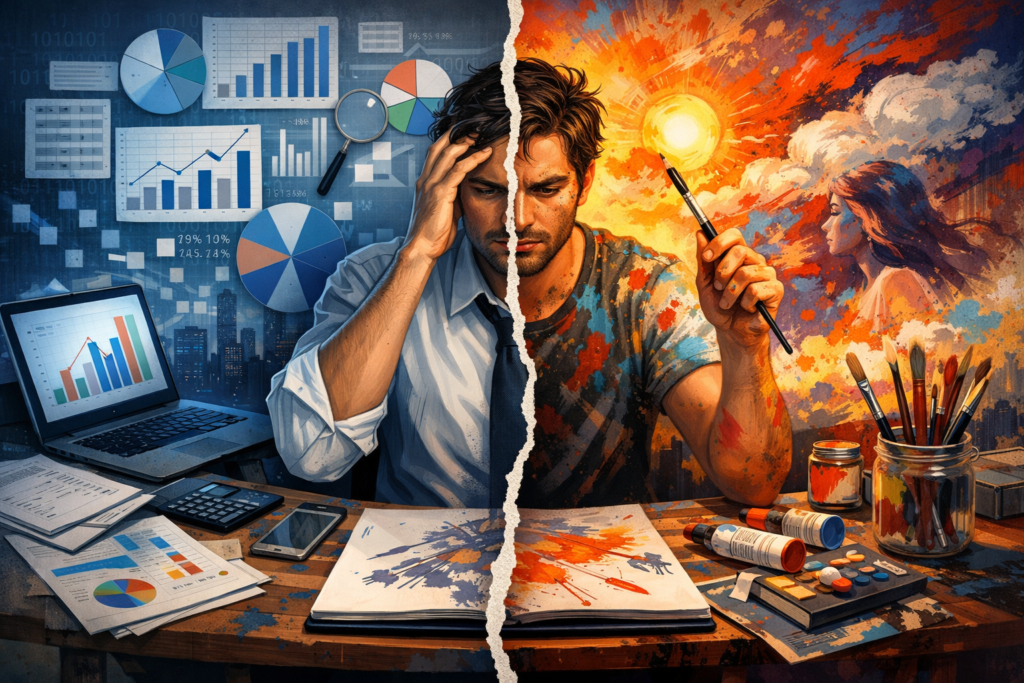
The use of technology in art has never been limited to the advent of movie making, or the digital editing software. Algorithms are nothing but the new step in this evolution. They provide potent means of comprehending audiences, enhancing distribution, and expanding content worldwide. Nevertheless, when pushed to the extremes, they may make creativity seem more like a production that is calculated instead of an emotional outpouring. It is not about technology but the way it is utilized in the creative ecosystems.
Responsibility of the audience in creating content.
Much as viewers may not know, they contribute to the creation of entertainment trends. Each like, share, and click keeps the algorithm going, strengthening some kinds of content. When the viewers are the active users of the platforms, who engage in the search of various and valuable stories, the platforms will be more inclined to advertise them. It implies that the future of creativity is not only in the control of creators or platforms, but also in the attitude and consciousness of the audience.
Conclusion
The art vs algorithms debate is indicative of an underlying worry on the future of creativity in the entertainment industry. Algorithms have made accessibility and personalization more achievable, but they are also posing a threat of reducing art to a product formula.
Balance is the real thing. When algorithms can take over in the industry, then it can lose the creativity and emotion that characterizes great storytelling. Nevertheless, with creators, platforms, and audiences collaborating in an effort to put more emphasis on authenticity, entertainment can transform without sacrificing its core.
FAQs
1. What is algorithm vs art?
The debate is whether human creativity in the entertainment industry is being usurped by data-driven algorithms and thus less creativity.
2. What is the effect of algorithms on content creation?
They lead the creators to create something that aligns to the audience preferences and the engagement patterns and are usually driven by performance rather than the creativity.
3. What is making entertainment so monotonous?
Since platforms market content which has already been successful, they encourage creators to do the same.
4. Will creativity be able to survive in an algorithm world?
Yes, but it takes particular efforts on the part of creators and platforms to emphasize originality as well as data insights.
5. What are audiences doing in this debate?
Algorithms are shaped by the actions of audiences, i.e., their preferences affect the promotion of a particular type of content.
Share this content: