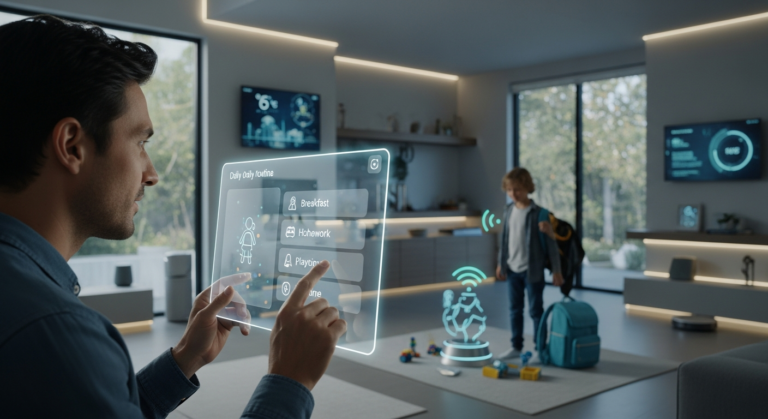
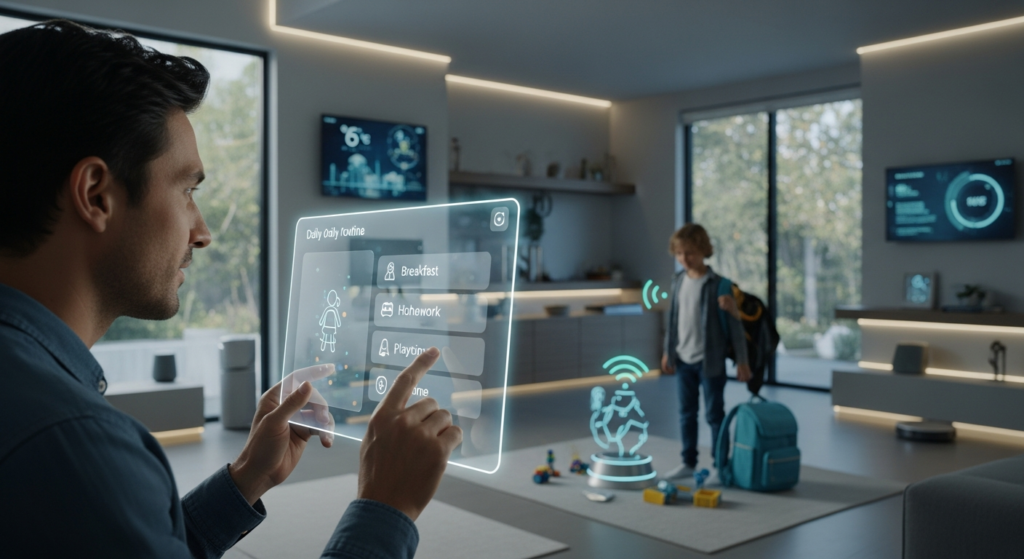
Parent using smart AI assistant organizing child daily routines
The change in parenting is faster than ever before. Artificial intelligence is no longer a convenience, it is actively involved in raising children. AI parenting partners are changing the way families operate, whether it is scheduling, or even evaluation of emotions. They assure efficiency and more intelligent decision-making, yet there is another issue that is brought out by these tools; are parents overreliant on technology?
With AI becoming more and more competent, it should be known how it is affecting parenting in both positive and negative ways and the implications of this on how families will be in the future.
The Emergence of AI Parenthood Partners.
AI parenting partners aim to make parenting as easy as possible, and enhance child outcomes. Such systems take advantage of complex algorithms and real-time information to provide individualized support.
Smart Monitoring Systems
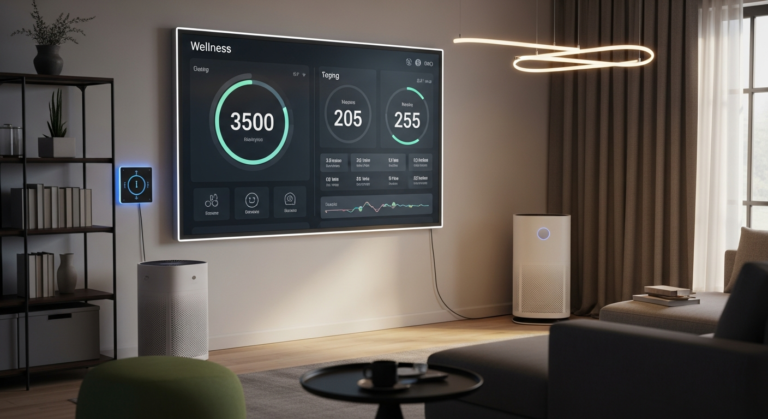
The use of AI in monitoring has been developed to a new level compared to the conventional baby monitors. These systems monitor the sleeping patterns, breathing, movement and even minor behavioral changes. They are able to notify parents real-time in case something is not normal, and prompt actions can be taken. Such awareness gives a sense of reassurance particularly to new parents and increases the level of supervision is not necessary as it is always present.
Personalized Learning Tools
AI tutors have transformed education by changing the individual learning style of the child. Such tools pinpoint weaknesses and strengths, and modify lessons as they go. Children are given special care that is in most cases hard to realize in the conventional classrooms. This, however, implies that the children can become more dependent on digital teaching as opposed to human teaching.
Daily Routine Automation
The daily parenting activities that AI assistants can now carry out include reminders of homework and meal planning, and even bedtime schedules. This alleviates stress among parents and provides a disciplined set up in children. Although helpful, it can also lead to a somewhat automatized process of parenting, rather than a personal one.
Most important AI Advantages in Parenting.
- Saves time on the part of parents who have to undertake recurrent daily tasks.
- Offers provide information on the growth of a child and his or her habits in a data-driven way.
- Enhances the learning experience with adjustable and tailored education.
- Identifies the early symptoms of health or behaviour problems in order to take early measures.
- Helps in maintaining a balance between work and life by alleviating stress in parenting.
Significant worries of AI Parenting.
- Reduces face-to-face communication between children and parents.
- Promotes excessive use of technology in making critical decisions.
- Raise serious issues of privacy of data and safety of children.
- Reduces the chances of children acquiring knowledge by providing real life experiences.
- Undermines parental trust and instinct in the long-run.
The Application of AI in Child Development.
Cognitive Development Changes
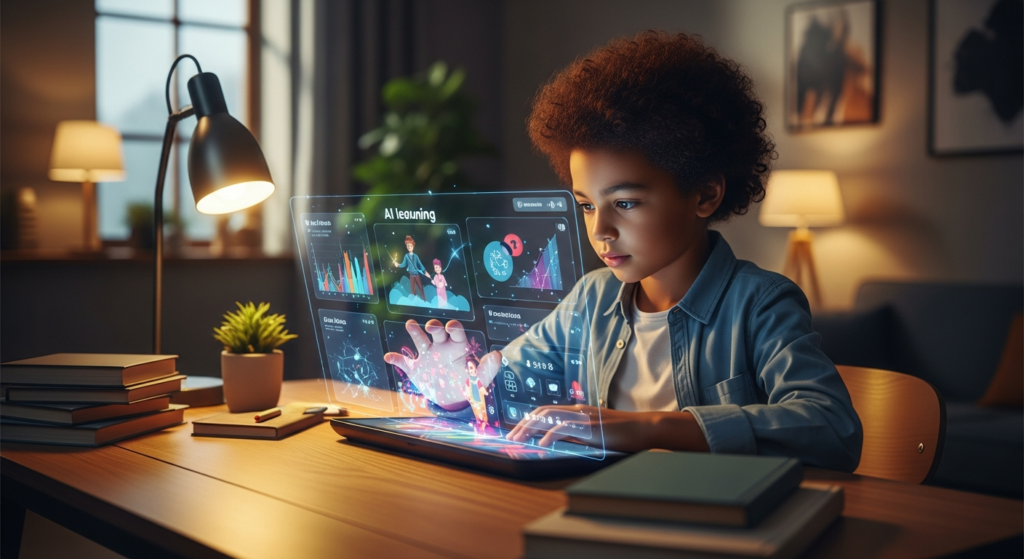
Learning can be expedited with the help of AI tools that can offer immediate answers and directed instructions. On the one hand, this enhances the performance of a child; on the other hand, it can lead to a child being unable to think critically and come up with a solution on his/her own. True learning can be achieved through trial and error, and AI can reduce it unintentionally.
Emotional Growth Challenges
Human interaction is essential in emotional development- to learn the tone, empathy and real-life reaction. Although it is a highly developed technology, AI is unable to entirely mimic human emotions. Having too much AI interaction can hinder a child in their capacity to relate well with others.
Behavioral Conditioning
AI systems tend to give rewards on specific actions, which makes children act in the way algorithms propose. Although this can be a way of instilling discipline, it can also limit creativity and individuality when not done in the right way.
The way Parents can be in balance.
Prioritizing Real Connections
It is important that parents do not have technology to substitute time togetherness. Trust and emotional strength can only be developed in children through conversations and shared activities as well as individual attention.
As an Aid, Not a Master.
AI must not make decisions, it should guide. When making crucial decisions concerning how to raise their child, parents should consider the recommendations and make decisions based on their personal judgment.
Encouraging Offline Experiences
The children are supposed to be taught to play outside, socialize with fellow children and to explore the world without using the digital world. Such experiences cannot be substituted with AI and are essential to the entire development.
The Future of AI-powered parenting.
In the future, AI parenting partners are bound to be even more advanced. They can help to plan long-term, provide career advice, and develop emotionally. Nevertheless, with such an enhanced ability, parents will also be required to be more responsible to make sure that the use is ethical and balanced.
Parenting of the future will not be a matter of either AI or traditional approaches, it will be about a successful integration of the two. The successful families will be those that embrace technology as an instrument and maintain the human nature of parenting.
Conclusion
In 2026 AI parenting partners are transforming the way children are brought up. They are convenient, effective and provide useful information that can help in making parenting less stressful and more enlightened. Parenting does not only involve task management though; it involves the management of relationships, impartation of values and emotional management of children.
These goals can be aided by technology but cannot substitute the humanity aspect of the relationship which is what true parenting entails. It is up to the modern parents to find a balance between utilizing AI, on the one hand, and love, care, and personal involvement, as the central aspects of family life, on the other hand.
FAQs
1. What is an AI parenting partner?
An AI parenting partner is a technology that assists parents in monitoring, education, and day-to-day activities by artificial intelligence.
2. Will AI be able to substitute parents in 2026?
No, AI is assisting the parents though excessive reliance may decrease the active involvement of parents.
3. What are the dangers of applying AI in parenting?
The principal risks are low levels of bonding, privacy issues, and making decisions based on technology.
4. AI and child development: What is the impact?
With an appropriate balance, AI can enhance the learning process but can affect emotional and social development when overused.
5. What is a responsible use of AI by parents?
Through viewing it as a means of support and being appropriately interested in the life of their child.
Share this content: