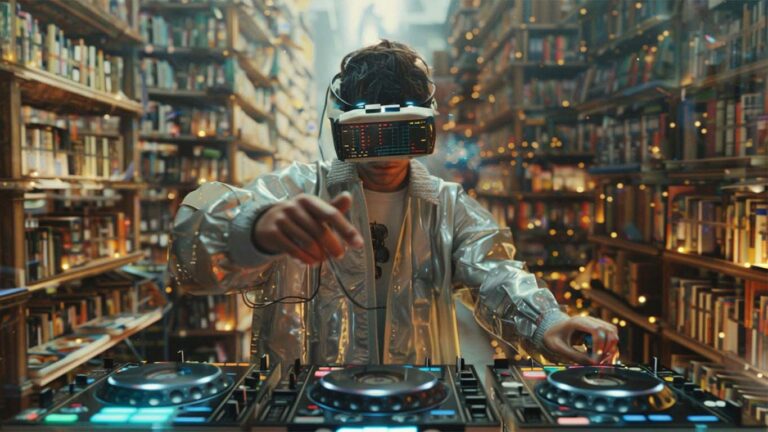
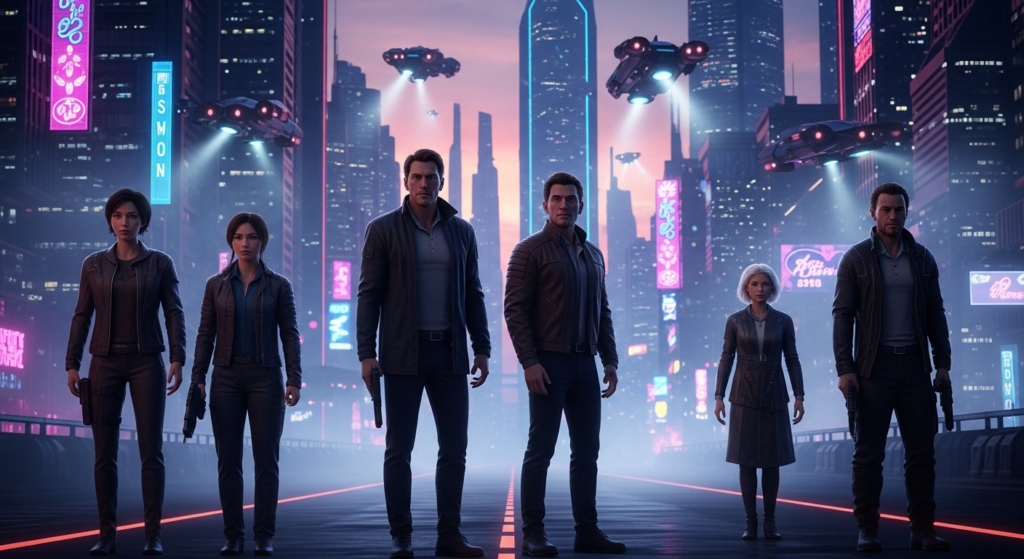
Futuristic movie scene created entirely using advanced artificial intelligence tools
The development of artificial intelligence is rapidly changing any sector in the world, and cinema is not an exception. What used to be a purely human-driven creative industry is being affected by intelligent machines which can write scripts, produce images, and even reproduce the human story patternism. AI is advancing, casting a very important question about the future of cinema: will it still be the human directors that will be at the center of the movie-making process, or will AI become the complete overtaker of the creative process? Although the efficiency and innovation provided by AI are truly astounding, filmmaking is connected firmly to the human sentiment, viewpoint, and artistic perception. Such equilibrium between technology and creativity will eventually determine the movie direction in the future.
The Rising Application of AI in the Movie Industry.
AI is already being incorporated into various phases of film production, starting at the pre-production point and ending at the post-production one. At an initial level, AI will be able to scan scripts, propose their refinement, and even forecast the reactions of the audience on the basis of past experience. This can enable studios to make better decisions that are informed before spending a lot of money on production. AI can be used in filming to guide camera movement, lighting, and live queue views, and this enables the director to better visualize the scene. In the post production, AI is used to automate the editing, color grading and sound design, the time it takes to complete a film is significantly shortened. Not only is the film-making process becoming faster, but it is also becoming more affordable to independent makers with minimal budgets.
The role of AI in transforming creative decision-making.
The capabilities of AI to work with lots of data enable it to find trends in successful films, which may be used to impact the creative decision. It can suggest structure of the plots, the character lines and even the style of dialogue that can appeal to audiences. Nevertheless, this fact-based method can bring about redundant narrations when overextended. Creativity is driven by originality and risk taking that AI which is based on previously existing data may not accomplish. Although AI is able to help in the generation of ideas, the ultimate creative choices will have to rest with human beings to create a sense of originality and emotional richness. This relationship makes AI augment creativity but not eliminate it.
The major directions that AI is affecting filmmaking.
- Mechanizing video editing and post-production.
- Producing scripts and story lines on the basis of data trends.
- Developing the visual effects in a realistic fashion without the use of physical sets.
- Helping to make decisions with the audience analytics.
- Improving sound design and composition of music.
- Allowing the visualization of the scene in real-time during shooting.
- The reason why Human Directors are Still Important.
Although AI is rapidly developing, human directors add new values that machines are unable to imitate. Film direction is not simply a matter of compiling shots, but recognizing the emotions, directing the actors, and the creative choices that appeal to the viewers. Human directors are also guided by personal experiences, cultures and emotional intelligence in the production of stories that are genuine. The ability to modify unforeseeable problems on set, make gut decisions and inspire teams to make a vision work are all aspects that can be adapted. These are human factors, which are critical in making movies that resonate with the audience, which AI cannot accomplish.
The Future of Human and AI Collaboration.
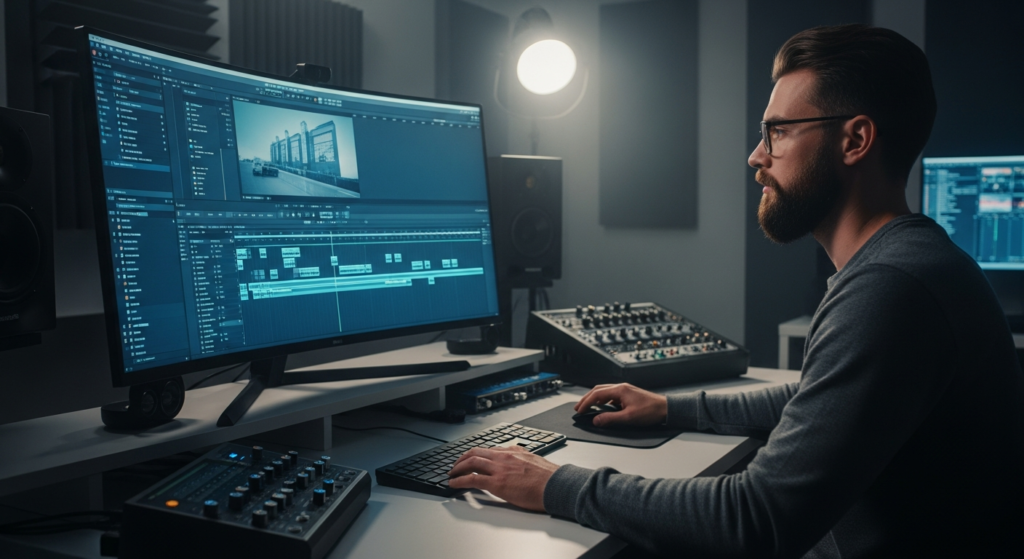
Instead of substituting human directors, AI will probably be used as a collaborative technology that will improve their potential. The future can see the directors use AI in technical work and concentrate more on storytelling and the direction. Robots are able to approach routine and monotonous tasks and enable the film-maker to explore new concepts and challenge creative limits. This partnership may result in the creation of a new stage in filmmaking when technology and human imagination are hand in hand. Directors that adopt the use of AI tools will tend to be at an advantage because they are able to create good content with ease.
Problems and Moral Reflections.
The implementation of AI into the movie-making industry is also associated with numerous challenges and ethical issues. Possibly one of the biggest problems is job displacement since automation might lead to the elimination of specific jobs in the industry. Though new opportunities will arise, the change can prove to be challenging to most professionals. Originality is another issue: AI-generated work can be too dependent on the existing data so that the films become repetitive or formulaic. Furthermore, the issues of ownership and copyright have not been resolved, and the question of who owns a film made by AI arises. All these issues point to the necessity of a set of regulations and ethical codes of conduct as AI keeps advancing in the entertainment sector.
Conclusion
AI-generated films are a major change to the film-making process, and they do not mark the disappearance of human film directors. On the contrary, they are the starting point in a new era of collaboration where technology boosts human creativity, not substituting it. Human directors will still be seen to be critical in the development of stories, direction and the introduction of emotional value to the film. The most successful creators will be those that will manage to combine technological tools with an artistic vision as AI gets more involved in the filmmaking process. Cinema does not have to decide between human and AI and instead should use the benefits of both to make more captivating and innovative narrative experiences.
FAQs
1. Will AI push film directors out of business?
No, AI will never complete the role of a director as it does not have the emotional intelligence, creativity, and leadership ability required to make a film.
2. What are the differences between AI-generated movies and the traditional films?
AI movie creation is based on algorithms to screenplay, visuals, and editing more than the traditional movies that are more based on human imagination and manual labor.
3. Is it possible to tell original stories using AI?
The AI should be able to produce stories on the patterns and data but still, the originality and actual emotion needs to be done by humans and their creativity.
4. Why is AI useful in the industry of filmmaking?
AI enhances efficiency, lowers the cost, increases the production time, and enables the filmmakers to explore new creative opportunities.
5. What are the skills that the directors of the future will require?
Directors in the future will require both storytelling skills, technical skills and the skills of operating with the AI tools.
Share this content: