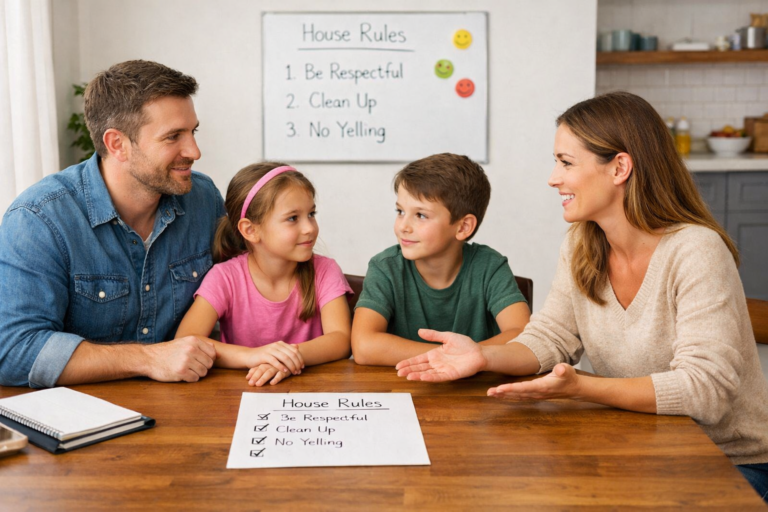
Parents and kids discussing house rules together calmly indoors
Parenting practices have been in constant change over time as a result of cultural shifts, research, and social trends. In 2026 that which pertains to gentle parenting as opposed to traditional is at the fore of public discourse like never before. We see an increased awareness of the importance of meeting a child’s emotional needs and improving their mental health which in turn has made parents less focused on the issue of obedience. What they want now is to raise outgoing, independent and confident individuals. That shift has brought about a great deal of confusion as to what really does work in the long term. Some put forth that a parent should be very empathetic and responsive to their child’s needs, others that instilling discipline and authority is the way to go. What we find though is that the answer is a balance which includes elements of both approaches which in the end prove to be the most effective.
Understanding Gentle Parenting
Gentle parenting is a philosophy which puts at its core empathy, respect and emotional connection between parent and child. We see in it a parent’s role to try to understand their child’s feelings as they present them rather than to immediately dismiss or punish. Also we see parents responding out of calm and considered action instead of anger or strict control. This approach encourages open communication which in turn allows the child to put forward what is on their mind and in their feelings without fear of retribution. Over time this we see to help children grow in emotional intelligence, self awareness and in confidence to manage their feelings. But also gentle parenting requires parents to be patient and consistent which at times can be very hard for parents dealing with the stresses and timetables of daily life.
Understanding Traditional Parenting
In past times we saw a great deal of what you may term “traditional” parenting which revolved around discipline, obedience and respect for authority. This approach is characterized by the setting of very clear rules, expectations and the application of consequences for breaking those rules. That which we are talking about here has been the norm for many generations and is present in very structured environments which in turn help the child to see what is expected of them. Also parents may use rewards and punishments as tools to shape behavior which in turn is meant to instill in the child a sense of responsibility at an early age. Though this does produce individuals who are disciplined and respectful it also at times may stifle emotional output if not done so in a certain way. Kids brought up in very strict environments may do as they are told but at the same time may have trouble putting into words what they are feeling.
Key Differences Between the Two Approaches
- Gentle parenting focuses on emotional connection, in contrast to traditional parenting which puts more value in discipline and obedience.
- In gentle parenting we have open and two way communication, in traditional parenting it is more directive and parent led.
- Gentle parenting is a style which includes lots of guidance in the child’s development, also it is typical that traditional parenting uses more of a reward and punishment approach.
- In gentle parenting emotional outpouring is supported but in traditional methods it may be suppressed.
- In gentle parenting authority is a team effort, in traditional parenting we see a more top down approach.
- Gentle parenting fosters internal motivation, at the same time traditional parenting often uses external control.
What Research Suggests in 2026
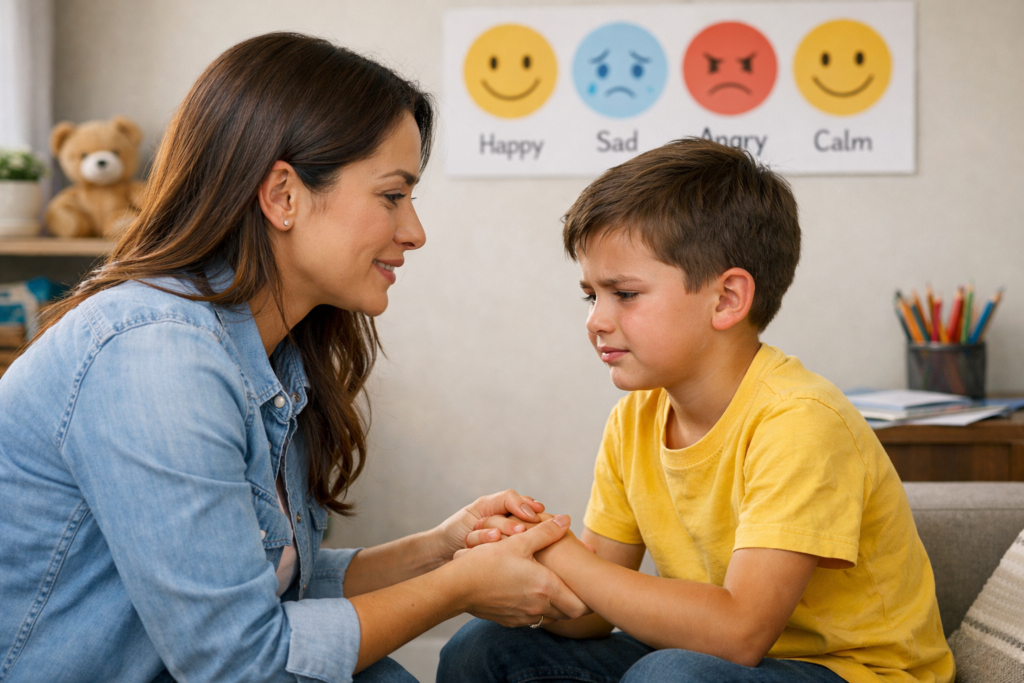
In 2026 modern child development research reports that emotional connection and responsive parenting are of great importance. We see that children which grow up in very supportive emotional environments do in fact tend to do better in terms of mental health, report stronger relationships, and see improvement in problem solving. Also we see that gentle parenting which does what it does by nurturing a child’s emotional well being and at the same time promoting healthy communication does in fact align very well with what the research is putting out there. But also what research is putting out there is that which kids do need structure to feel secure, that without that structure they may have issues with discipline and decision making. It is in this that traditional parenting still has a role to play as it does in setting out that which is expected in terms of limits and responsibility.
Why Extremes Often Fail
Relying on a single parenting style is a recipe for trouble. When we turn to gentle parenting which is also free of structure, what we often see is that the lines of what is acceptable blur out which in turn leaves our kids without clear boundaries. Also at the opposite end of the spectrum very strict traditional methods can produce compliance out of fear which may not translate into true internalized values. Sure the rules may be followed but what we see is a disconnection which in turn affects their self confidence and their social skills. In both of these scenarios what we see is a large-scale neglect in terms of a child’s total growth. That is why in 2026 we are seeing experts stress the point of a flexible and adaptive approach to parenting as opposed to a by the book approach.
What Actually Works: A Fair Approach.
Today what we see as the most effective parenting style is that of the balanced or authoritative approach which is a mix of the emotional focus of gentle parenting and the structure of traditional parenting. Parents set out clear rules and expectations which they back up with empathy and support. They use conversation as a tool to guide their kids which at the same time they don’t shrink from to set boundaries when needed. This balance which gives the kids a sense of security as well as being heard which in turn causes them to develop emotional intelligence along with discipline. In the end this prepares them better for the real world than either extreme approach does alone.
Practical Application in Daily Life
In the present of balanced parenting we see that it takes deliberate action and consistency. Parents may begin by really listening to what their kids have to say without jumping to judgment which in turn makes them feel heard and valued. Also it is of great importance to set out what is expected from them in terms of behavior and to follow though with what is to be done should they fall short of those expectations. Also in using natural consequences as a tool instead of severe punishments which kids in turn see the results of their actions. Also by modeling respectful behavior parents teach their kids how to in turn be respectful to others. Over time this consistent approach weaves into a trust between parent and child, improves the relationship and at the same time brings out positive behavior.
Final Thoughts
In the year 2026 parenting has outgrown the black and white choice between strict and permissive methods; instead there is a need for a more dynamic approach. While gentle and traditional parenting both have much to give, no one size fits all. What is essential is the skill to know which is the right time for empathy and which is the time for setting boundaries. Also each child is a different story, and parenting should play out from that unique script as opposed to a pre-written play. By putting in place emotional support structures and at the same time setting out clear rules, parents can grow up not just to be well behaved but also to be emotionally secure and self assured. In the end what we see as the best method is a thought out balance that grows along with the parent and the child.
FAQs
Is tender parenting too easy?
Not always. When done right within set parameters it does for emotional growth and self discipline.
Does traditional parenting hurt children?
At times. Structure and routine may be of benefit, but severe punishment may in fact hurt emotional growth.
In 2026 what is the best parenting style?
Balanced and authoritative parenting is what most today prefer.
Can I do a blend of gentle and traditional parenting?
Sure, also we see that which strategies we put in place which combine both approaches is what works best for the kids.
How do I begin with balanced parenting?
Start with empathy in your discipline approach but at the same time hold to consistent rules and expectations.
Share this content: