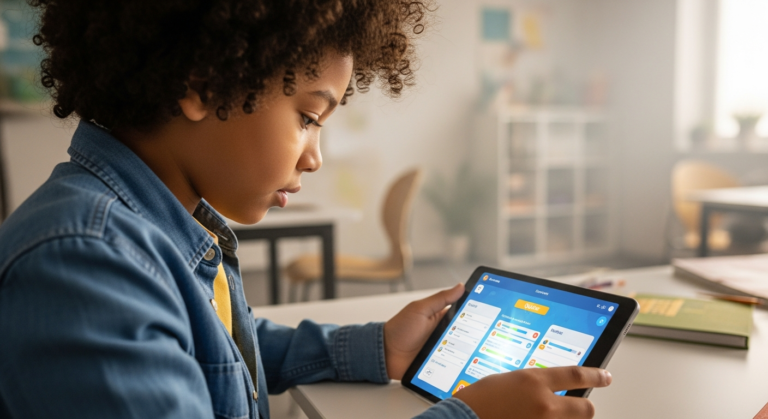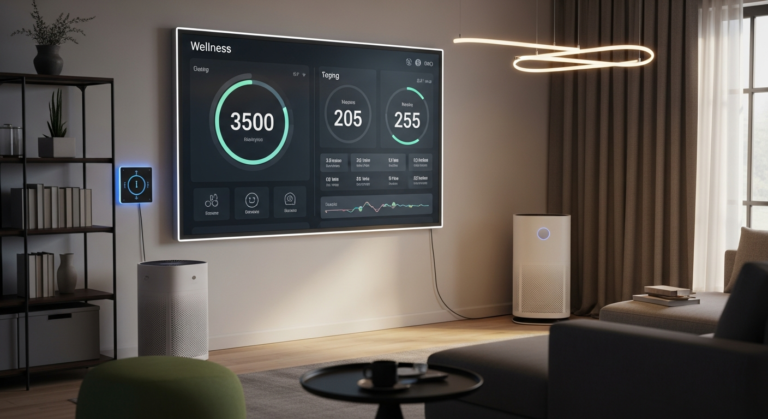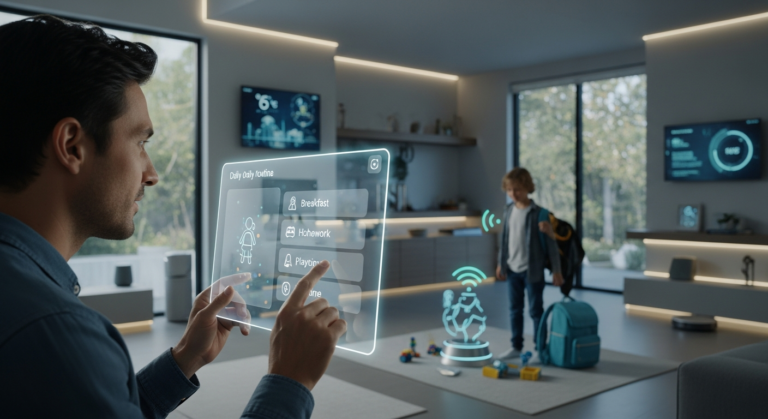
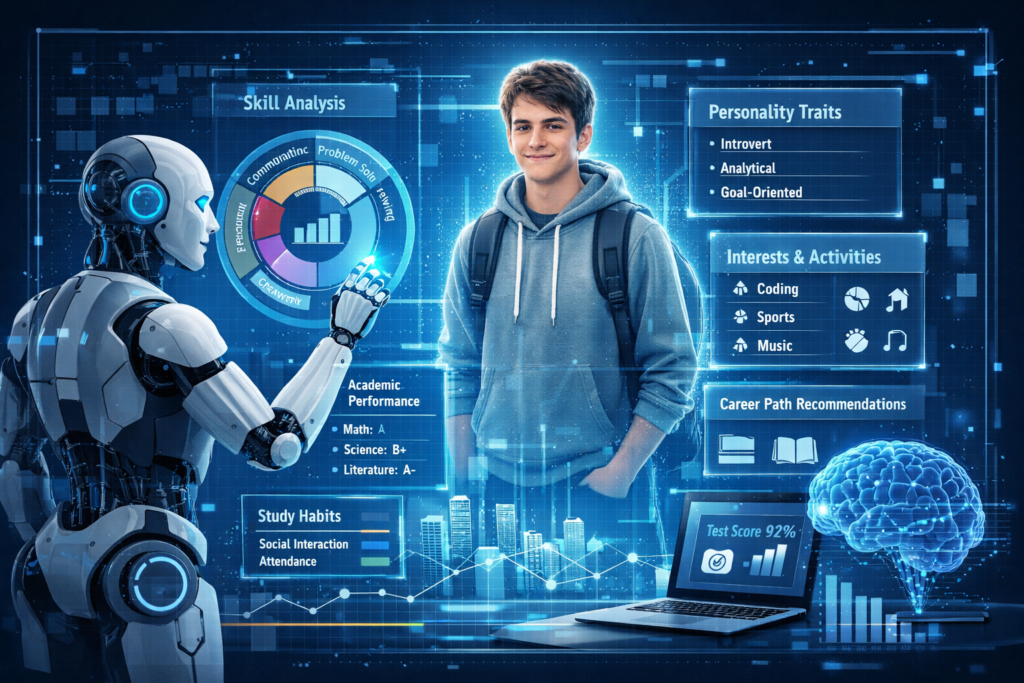
AI system creating virtual student profile analyzing skills and behavior
The education sector is changing quickly with the incorporation of Artificial Intelligence, and the notion of Digital Twin Students is one of the most drastic changes. This concept revolves around the development of a virtual, data-driven representation of the student, which is able to analyze behavior, learning patterns and performance to forecast the future career directions. Learners are no longer left to guess or have only a few guides because they now have access to intelligent systems which offer highly individualized and predictive information.
What are Digital Twin Students?
The creation of Digital Twins.
Digital Twin Students are constructed on the basis of a continuous gathering and analysis of data through various sources like academic data, online learning assignments, behavioral interactions, and even cognitive reactions. This data is then processed into an advanced AI model that creates a dynamic virtual representation of the student, and changes as the student changes. This digital variant is not only a good indicator of academic abilities but also decision-making processes and emotional orientations, so it is an effective predictive measure.
Basic Technology Underlying it.
Digital twin systems are based on the principles of machine learning, data analytics, and behavioral intelligence. The technologies collaborate to detect patterns that humans can miss. Using big data, AI algorithms study the data, match profiles of students with successful career paths, and create knowledge that is both accurate and flexible to modifications. These systems are more accurate and reliable as the level of technology increases.
The Way AI Guesses Occupations.
Key Prediction Factors
- Academic achievement and academic strengths.
- Lifestyle and way of decision making.
- Emotional reactions and ability to deal with stress.
- Speed of learning and ability to adapt to new ideas.
- Individual interests and level of engagement.
The reason behind the growing accuracy of predictions.
- Real time updates of data.
- Globalization with the trends in the job market.
- Machine learning advanced algorithms.
- Intelligence feedback loops in the system.
- Cross-matching with millions of career data.
Application of Predictions in Real Life.
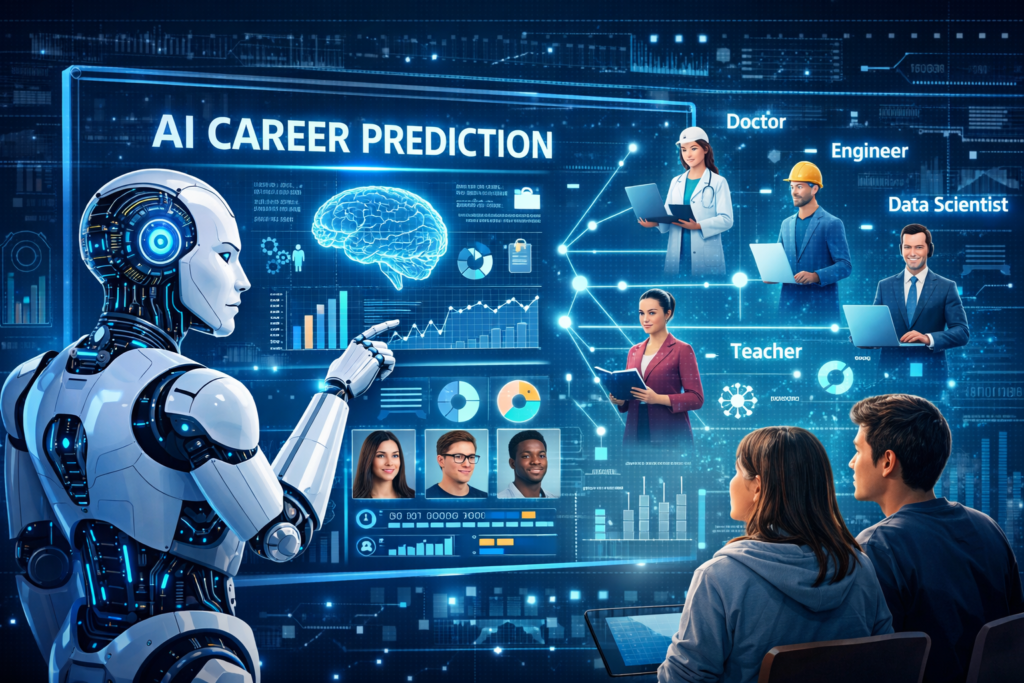
The digital twins driven by AI are already implemented in the next-generation education platforms to predict career outcomes and suggest the path of skill development. Students are able to pursue various career paths virtually, knowing the long term consequence of their decisions and adapt their learning strategies to this. This minimizes uncertainties and allows making more confident decisions.
Digital Twin Student benefits.
Major Advantages
- Recommendations on careers that are highly personalized.
- Early recognition of untapped abilities.
- Minimal chances of inappropriate career decisions.
- Improved fit to the future job markets.
- On-going mentoring in the learning process.
Impact on Education System
- Move away from standardized to individualized learning.
- Greater involvement and incentive among students.
- Educator-friendly data-driven decision making.
- Improved academic outcomes
- Greater association between education and work.
Long-Term Impact
Digital twin systems have the potential to transform the ways in which people consider career planning over time. Students will make continuous adjustments, rather than making one-time decisions, which are made based on real-time insights. The result is more adaptable, resilient and future-focused workforce that is able to adapt to technological and economic shifts.
Difficulties and Moral issues.
Key Challenges
- Risks with data privacy and security.
- Possible bias of AI algorithms.
- Too much reliance on automated systems.
- Absence of emotional and human background.
- Moral issues on ownership of data.
The value of Human Oversight to this day.
Human judgment is still needed, even with the power of AI. The choice of careers is highly individual and is based on passion, values and life situations which AI may not be fully aware of. Teachers, coaches and advisors are important in decoding AI insights and making sure that learners make informed decisions that are balanced.
The Future of Digital Twin Students
The Digital Twin Students future holds the promise of making education a much more personalized and constantly changing ecosystem in which all learners are steered by real-time intelligence. With the advancement of AI systems, digital twins will not just suggest professions, but also proactively create them by suggesting the kind of skills, courses, and experiences that one can receive based on his or her development. Education will cease being a static degree to dynamic learning experiences that evolve as time goes by so that students are in tandem with the changing needs in the industry.
These online profiles can be used in classrooms in the future to continue into professional life and become a life-long work partner that develops with each skill acquired and each choice made. The interaction between schools and businesses will be enhanced, and the learning outcomes and the demands of the job will be aligned directly. Although this transformation has a huge potential, it will also necessitate a close balance, so that human creativity, passion, and individual choice should always be in the forefront of decision-making. Finally, Digital Twin Students will not only predict the future, but will assist people to construct the future themselves.
Conclusion
Digital Twin Students are a revolution in the educational system and career planning. Using AI to establish the future, students get access to information that has never been dreamed of. Nevertheless, this technology is to be regarded as an aid and not as something authoritative. The best solution is the combination of AI-based intelligence and human intuition, where students will be able not only to choose a successful career but also fulfill it.
FAQs
1. What is a Digital Twin Student?
A Digital Twin Student is a virtual AI model that can replicate the learning behavior, skills and patterns of a student to give future predictions based on future academic and career success.
2. What is the way AI makes the most appropriate career choice to a student?
AI examines various data points, including performance, interests, and behavior and compares them to industry requirements and trends.
3. Is the technology currently being used?
Yes, there are a number of sophisticated education systems and institutions that are starting to adopt AI-driven career prediction.
4. Are AI suggestions overridable by students?
By no means, AI recommendations should control decisions, they are supposed to provide a sense. The decision is always up to the students.
5. What are the largest risks of this system?
The primary risks are the data privacy issues, their bias of the algorithm, and excessive dependence on technology.
Share this content: